

The Stories That Shaped The Work.
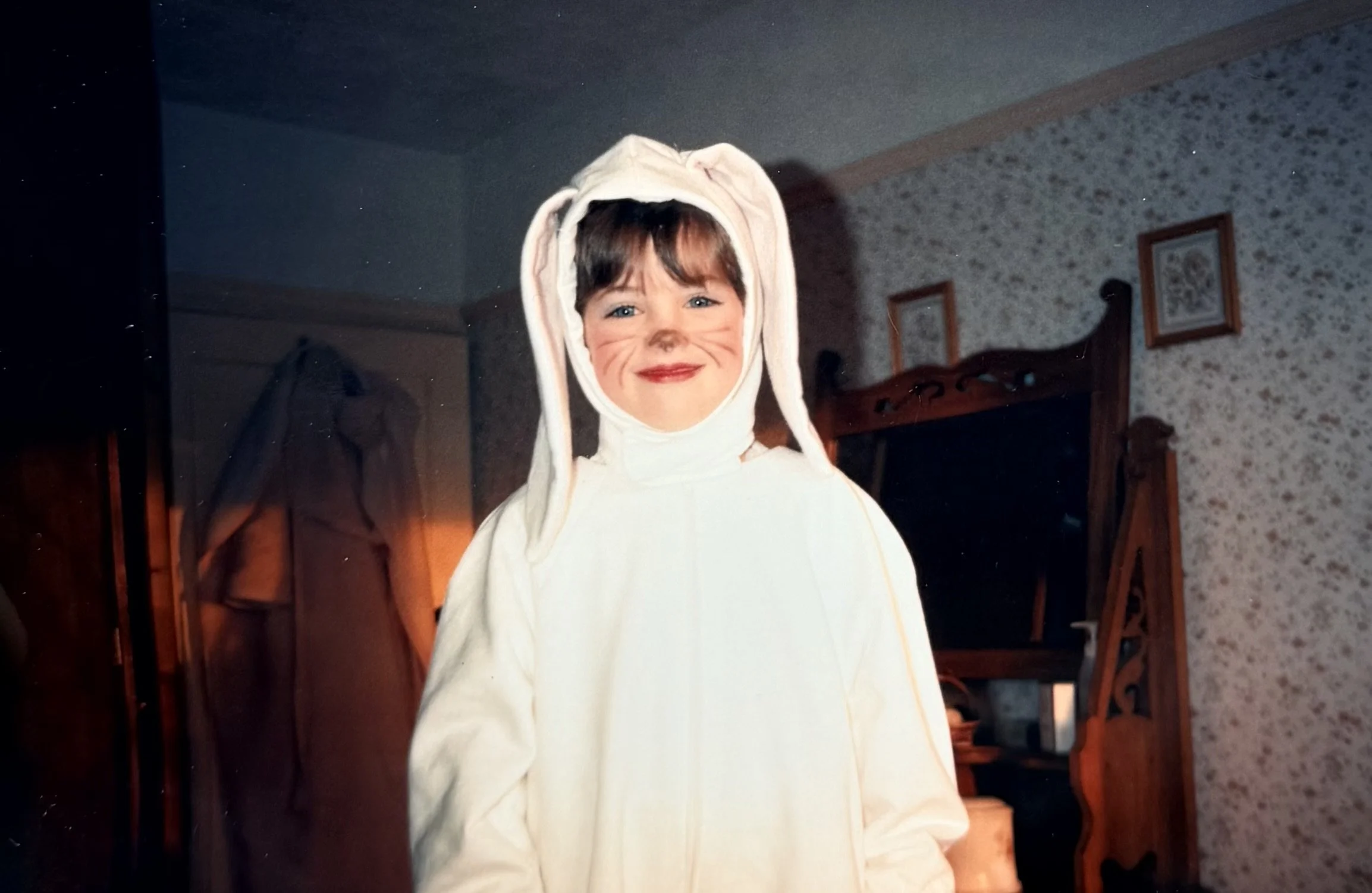
My first dance show
Learning the Lines.
I always felt like I was a slightly odd child but as a teenager I felt downright unusual; other people called me weird.
I often found it easier to talk to adults than people my own age; I loved learning and was constantly asking or answering questions; I made connections between things that other people didn’t see as connected and so some people found it hard to follow my train of thought — I was known to go off on philosophical tangents and whilst many teachers found this quirky and endearing, my peers? Not so much. At high school I found it hard to make friends — especially within friendship groups — and I became lonely at school, seeing others around me meeting up, being invited to parties, and gathering together at weekends but not being included. I knew I was different but I didn’t quite know why.
Performing for me.
I always loved performing on the stage and I think a big part of that was because when someone else provided the lines and gave the directions, I knew how to be around other people and other people knew how to be around me. So, in my penultimate year of high school, I decided that I would ‘learn the lines’ and follow the directions of the people who always seemed to get it right. I picked a group I was half-connected to through people I knew and I started studying them. I dedicated myself to watching and analysing interaction: who said what and how, when did they speak and what did they talk about, what did their faces and bodies look like and how could I make mine look like that too. It wasn’t that I was oblivious to these things before; I had always been good at picking up on things in individuals — the smile that hides uncertainty, the laugh that hides embarrassment, the words that said 'I'm fine', but said in such a way that communicated ‘I’m not fine’. But in social situations there was always too much data. Too many signals that meant that group interactions felt like I was trying to tune into a radio station but was mainly hearing static and couldn’t pick up on what was really being said. But with a mission to overcome my social challenges and make friends, I relished the data.
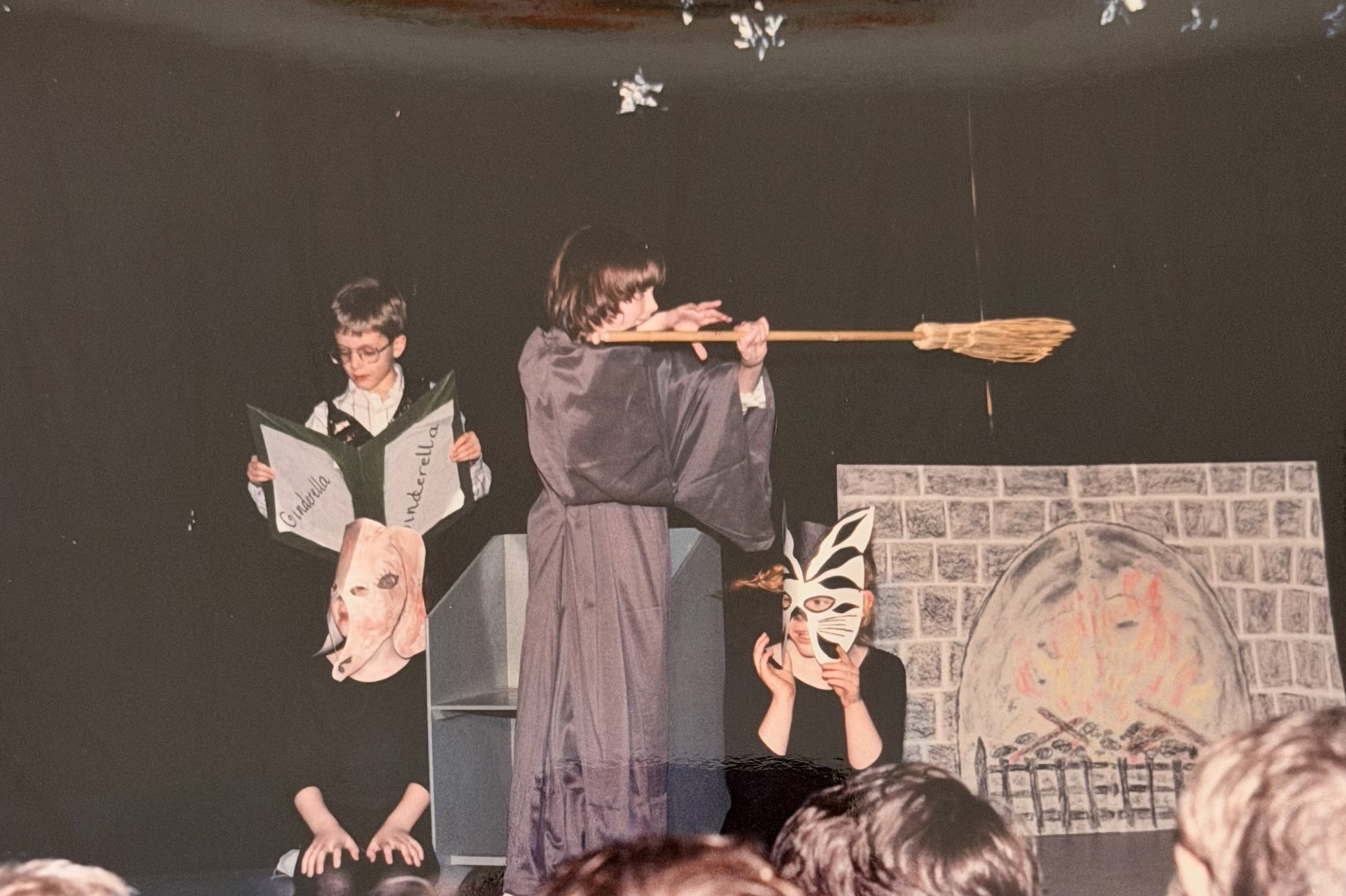
Performing in school play aged 8
The wrong script!
The differences between me and other people started becoming clearer and I realised that I would need to change radically in order to fit in: more interest in pop music and less on the meaning of life; no more asking or answering questions in class; more informality and less precision in language and definitely no more correcting peoples’ word choices or grammar. It took me a whole weekend to persuade myself it was ok to swear/cuss and I still cringe now when I recall how I responded when people would say things like “Can I lend a pencil?” (“No thanks, I’ve already got one). I wasn’t being awkward, I just hadn’t known what they meant until I watched other people respond! I started to see that people thought I was a ‘know-it-all’... I didn't know it all, I just loved learning but people didn’t see that.
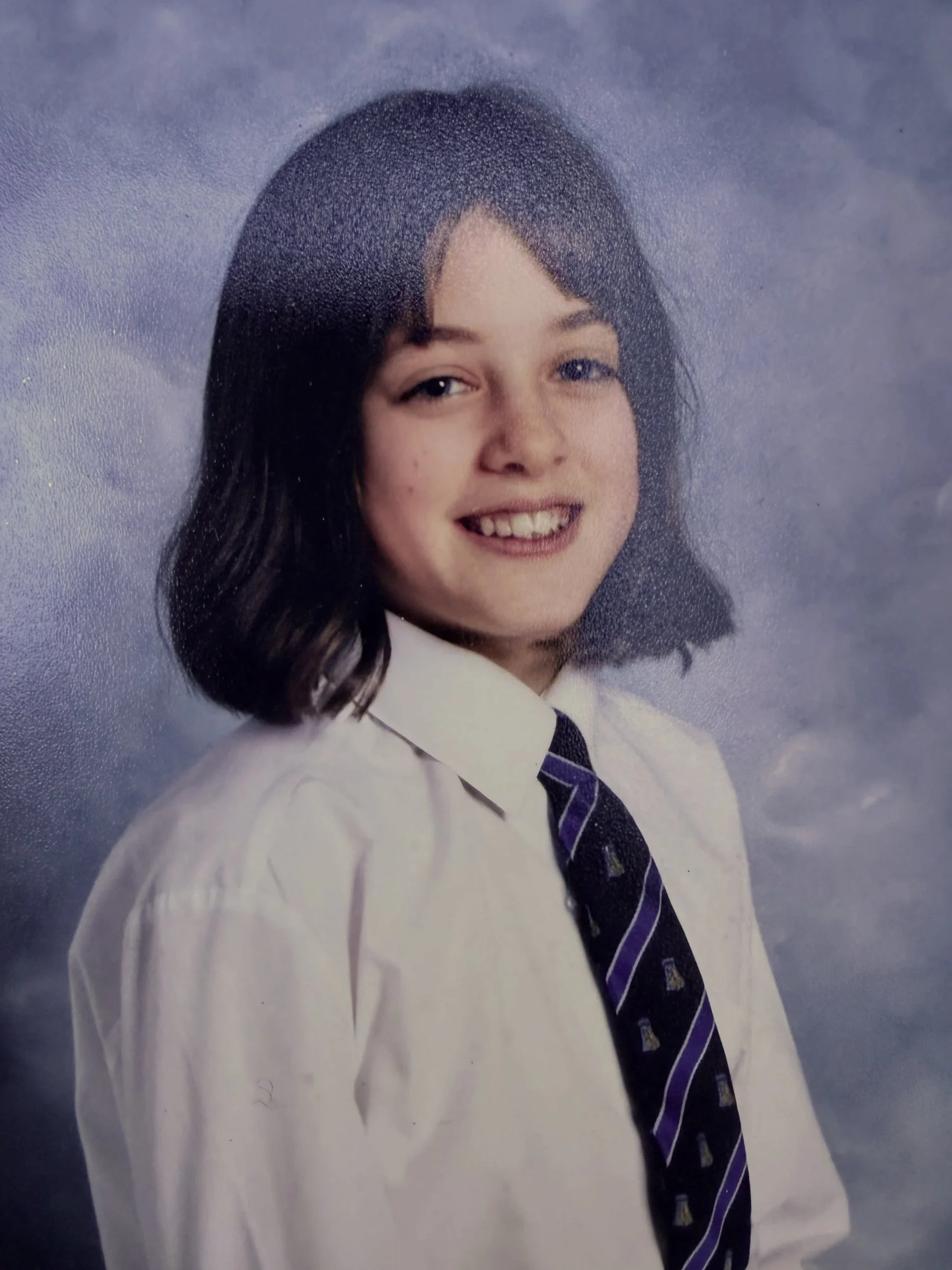
Starting high school aged 11
When belonging became the performance.
So, I started to change — slowly at first, but it began to work. People shifted how they spoke to me, they no longer rolled their eyes or tutted. There was a friendliness that hadn't been there before, and I began to be included in chats before classes started — did I like Oasis or Blur the best? I didn’t know, but it was nice to be asked!
So, I doubled down. I studied more, continued to change how I presented myself... imitated how others spoke, dressed, what they were interested in. When they asked me questions, I often tried to guess what the right answer was and say that. Like plasticine that gets more pliable the more it’s kneaded and moved, I was moulding myself into a newer version of me. On the surface it looked successful, only I was becoming more and more miserable. Especially because the old me kept ‘leaking’ — I'd forget that I was meant to be quiet in class, and I'd answer queries or ask questions because the love of learning & curiosity overtook my commitment to being in the background... But then people would comment again and I was reminded that there was still so much work to do and I'd get cross with myself for not managing myself better — punishing the parts of me that were resisting the edit with harsh words and self-admonition.
And then as we got to the end of the year, I remember walking over to the group I'd been spending time with - studying, analysing, copying - and I overheard people talking about outfit choices. I asked someone what was going on, and they casually replied it was for the party that ‘everyone’ was going to. Only everyone wasn't going. I hadn't been invited. My stomach dropped and I realised that for all my editing, modifying and remodelling I hadn’t achieved my objective at all. I had put in all of this effort, contorted myself to be ‘one of the group’ — making myself miserable in the process — and it hadn't even worked.
That was the day I realised that trying to become ‘acceptable’ isn't the same as being accepted and that fitting in isn't the same as belonging.
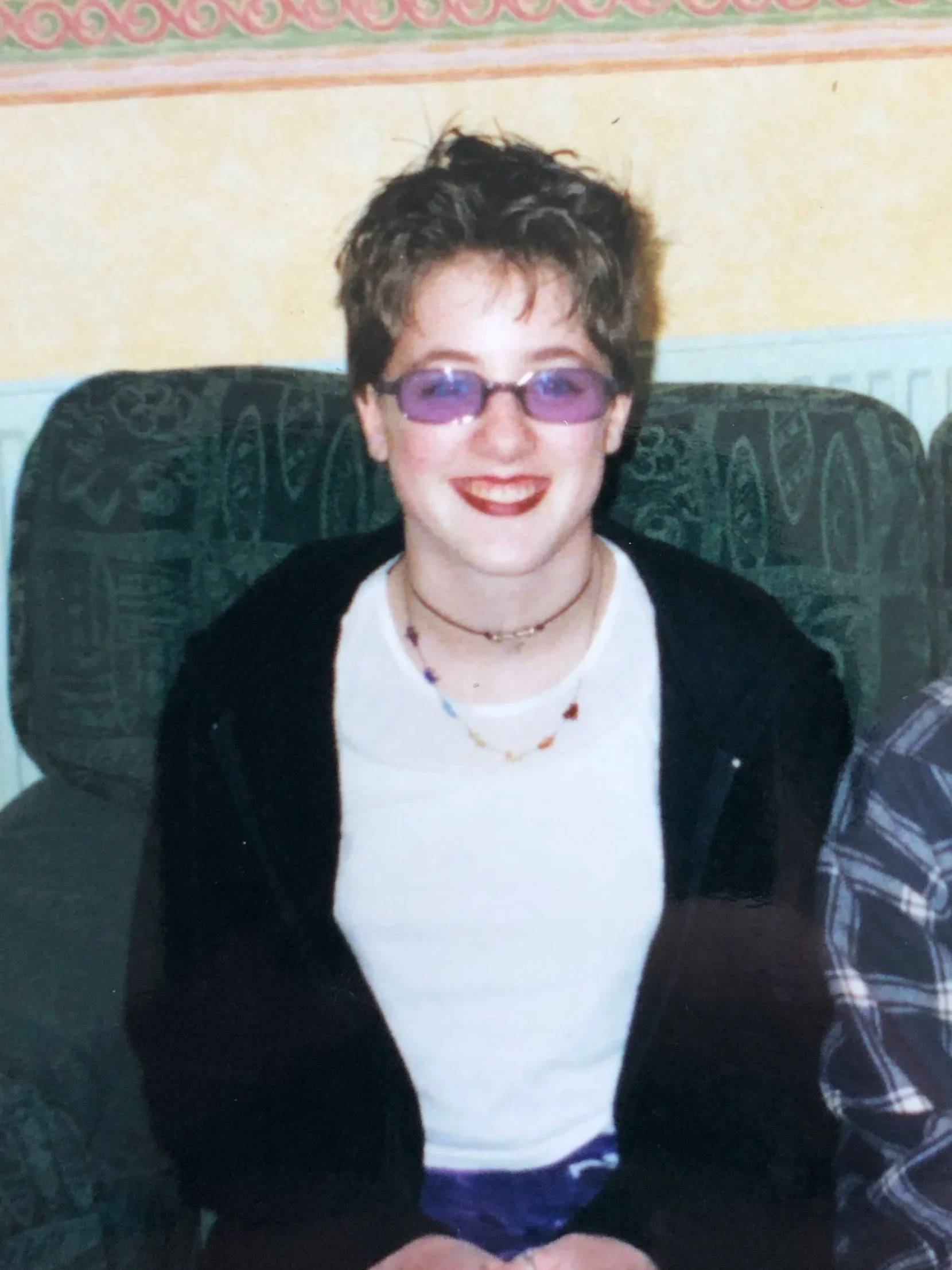
From imitation to calibration.
The year after, I came back to school as ‘me’ — and I had a much better year. I'd love to tell a version of the story that ends like a high-school-transformation-teen-movie: that being me suddenly became endearing and I gained loads of friends who liked me exactly as I was. That would have created a lovely narrative arc and a convenient allegory — 'be yourself, you're great just as you are!’ But that's not actually the ‘moral’ of this story.
When ‘authenticity’ doesn’t fit.
Because, honestly, I did need to change.
I lacked social skills and was precocious in ways that made other people feel awkward sometimes. I sounded smug and self-righteous – not purposefully, and not because I actually was smug or self-righteous, but because I was precise and often used language literally and intentionally.
I wasn't a 'teacher’s pet' to curry favour — I was an engaged teenager who loved asking and answering questions and understanding things as deeply as possible because learning brought me immense joy.
I wasn't performatively polite, or nosey for the sake of it, or contrary to be purposefully awkward — I had a love of words, was genuinely interested in people. And I was confused by inconsistencies that no one else seemed to think were inconsistent — like rules and processes that didn't make sense in relation to what they were trying to achieve, or signs that said things like ‘no parking, garage in constant use’ despite the fact that I never saw anyone use it!
And I also didn't communicate any of these things in ways that helped people see who I was and what was important to me.
I looked around and saw other people effortlessly navigating interaction and social life in ways that got them what they wanted – belonging — and I wanted that too.
I observed something true – other people found socialising easier than I did – but I incorrectly concluded that it meant that there was something fundamentally wrong with me and that the solution was to become someone else.
And when I observed, analysed and studied others and got a greater understanding of how to 'do’ social life in the way others did, people could access more of the me that existed underneath their interpretation of my behaviour.
Right tools, right job, wrong assignment.
The only problem was, I over-indexed on learning from others. I shifted from inspiration to imitation. I took a good thing — learning social skills — and I over-applied it. It was the right tool, but the wrong assignment.
New communication skills were good tools and I needed them; using them in service of connection with others was a worthy ‘job’. It’s just the ‘assignment’ was wrong — I translated the purpose of change from communication for connection and belonging into transformation and self-rejection.
In reaching for others, I sacrificed being me by trying to become someone else, and it didn’t increase my sense of belonging. In the process, I had not achieved belonging to the group; I had stopped belonging to myself.
Not ‘too much’, just miscalibrated to context.
Because I didn't need to 'transform’ into a different person, I needed to recalibrate aspects of who I already was. My emotional intensity wasn't 'too much' full stop, but occasionally it was mis-calibrated to the situation – sometimes it helped people open up and express things that they didn’t feel able to express to others, but sometimes “I’m fine” was a socially appropriate convention and not an untruth that needed to be unpacked.
And my curiosity and desire to understand things deeply weren’t wrong, but sometimes they were quick to fill a space, which didn’t always allow others to fill it with their curiosity… a curiosity that was sometimes quieter or slower or more tentative than mine.
Learning from other people about how they navigated social life gave me more tools to use to connect to others and enabled me to adapt to situations in many different ways. It was a good thing, taken too far, because I tried to change in a way that was self-abandoning – replacing myself, instead of developing myself.
Different songs, always the same dance
This pattern has shown up again and again in my life and has cost me when I’ve slipped back into imitation, often trying to make myself acceptable in lieu of being accepted. And it has showed up in all sorts of ways: like when I wasted huge amounts of food by planning, prepping and scheduling meals for a month because people at playgroup did it this way and they told me I should too — despite the fact that shopping every day had always worked well for me because I struggle to eat to a schedule; or the clothes I bought and wore (or didn’t wear and got rid of) because I was emulating the aesthetic I saw at the school gates and I thought if I looked like other people, they’d talk to me more; or the times I ruined a perfectly good afternoon by making my children do crafts with me because I looked around at other parents and concluded “that’s what good mothers do”. So, the story of 15-year-old Natasha didn't resolve into a lesson 'completed'. I may have vowed to never mould myself into someone else again but it's a promise I haven't always kept. Because sometimes the desire to connect to others overrides our desire to belong to ourselves. And because learning takes time and is messy and doesn't fit the neat and linear trajectory that we'd like it to.
Learning new moves.
But learning has happened in my life, and I’ve been able to recognise and interrupt the tendency to abandon myself by noticing more quickly when I am trading belonging for 'fitting in'. And it always starts with a recognition that my understanding of the situation — and the conclusions I draw about myself because of it — may be wrong, or at least partial. This enables me to access the power of reframing and recalibration: towards a more accurate understanding of the situation and the identification of the gaps or a mismatch in where I am with where I want to be, whilst also connecting me with the parts of myself that feel essential in some way. This has helped me to access a place of deeper joy by developing myself instead of trying to become someone else.
I used to think that if I could just learn how the ‘successful’ people do things, I’d work out how things are ‘meant to be done’, then I could do things properly and keep myself safe from the pain of loneliness, disconnection and not being enough (at the same time as feeling too much). But having dedicated significant time, effort and emotional energy – alongside over two decades of academic study and professional experience - to studying how social life works and using it to make things better for individuals, teams, and organisations, I’ve learned that there is no single set of rules or right answers because the 'right' answer always depends on the context. So, what’s the alternative? Well, it depends.
My statement that ‘it depends’ is not intended to make all things relative and it’s not a hedge. It’s actually intended as a starting point towards greater precision – because to me “it depends” always gives rise to a question… “depends on what?”. And that’s something that can be explored empirically and for which we can develop a greater understanding over time, allowing us to flex according to context in ways that help us operate and change more effectively.
‘It depends’ means being willing to find the variables that are relevant to a context, learn and understand the different dimensions of those variables, and work out how and when to apply them in service of what you’re trying to achieve.
Aligning approach, intention and purpose in ways that fit the context — the right tools, for the right job, for the right assignment.
This is central to my Adaptive Navigation approach.
From a way of being and thinking to an Adaptive Navigation System.
The Adaptive Navigation System grew from my orientation to the world, the experiences which gave rise to to my commitment to calibration over transformation, and by exploring ‘what it depends on’; it has been developed through lived experience, together with my academic, professional and teaching practice.
I developed it to provide a way of working with the complexity that exists in people, relationships, organisations and the situations we encounter — without either becoming overwhelmed by that complexity or collapsing it too quickly into a simple answer.
At its heart, the Adaptive Navigation System is an interest in fit.
A response that works brilliantly in one situation may be entirely wrong for another. Something that looks like a development need may instead be a mismatch between a person's existing capacities and the context in which they're trying to use them. An organisational problem that appears to require a new tool may turn out to be a problem with how the assignment itself has been understood.
Adaptive Navigation creates space to ask what we're actually dealing with before deciding what to do about it.
And while Adaptive Navigation provides models, distinctions and ways of working, it isn't intended to provide a formula for being human.
The aim is not to produce people, teams or organisations that all respond in the same way.
It is to help us see more of what is there, understand more of what it depends on, and have more possibilities available for navigating what we encounter.
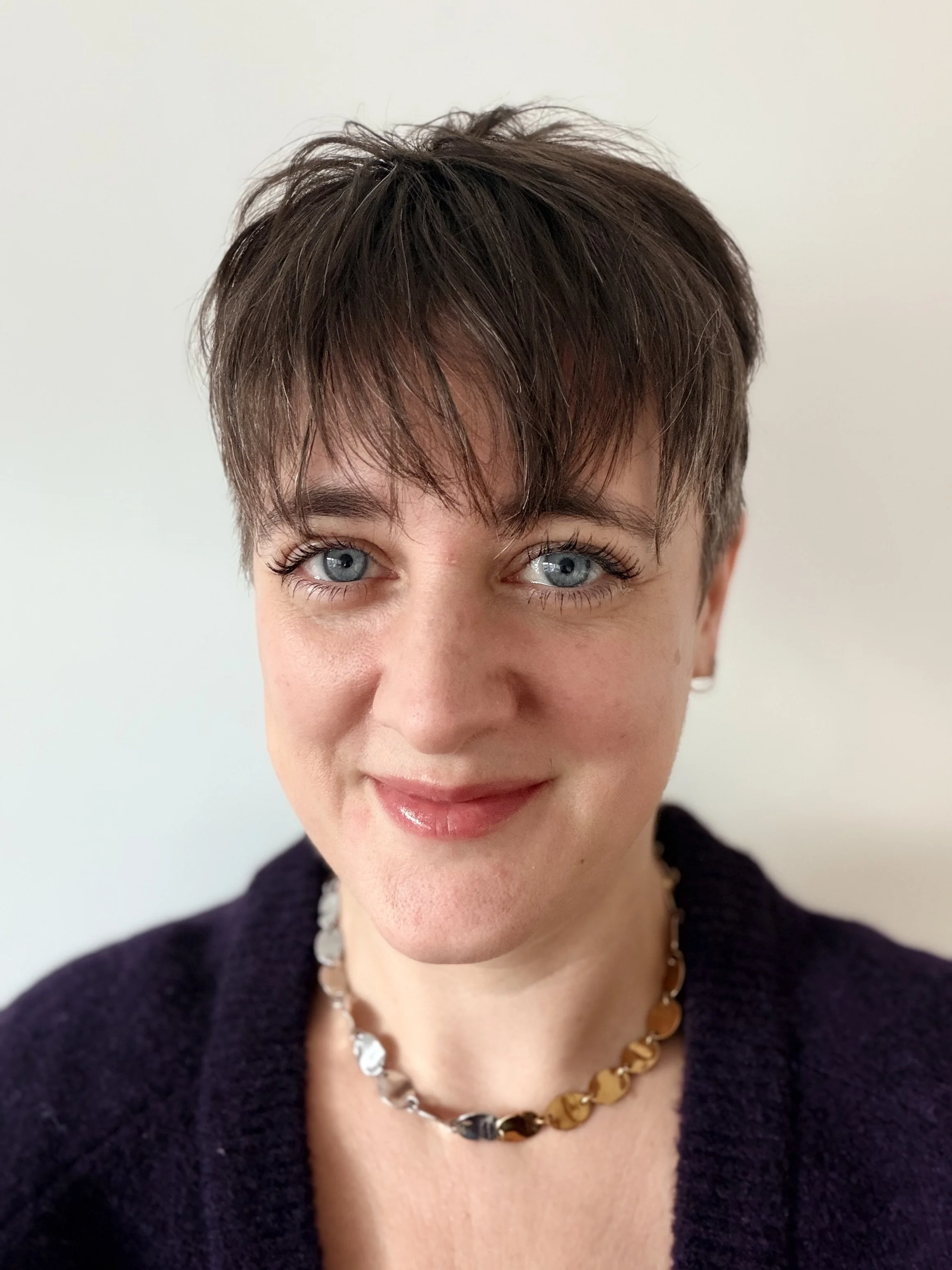
My Background — The Short Version!
I hold an MA in Social Research and a PhD in Sociology, both from the University of Leeds. My PhD is grounded in Erving Goffman's work on interaction and frame analysis: how people define and read situations, how they interpret their own and others feelings and experiences, and the shared understandings that make social communication possible, as well as creating the potential for misalignment and misunderstanding, especially when its assumed that our interpretations are the same as those around us.
I spent over a decade in the NHS, working across a range of roles and organisations — most recently at NHS England, where I focused on unlocking tricky delivery challenges through inquiry, analysis and problem-solving methodologies.
My work has given me a close, sustained view of how organisations and systems function under pressure: where good intentions meet structural friction, and where the fix usually isn't more effort, but a different way of seeing the problem.
Alongside that, I've done voluntary work in education — a different setting, but the same underlying interest: what actually helps people learn, connect, and function well together and in ways that foster inclusion, belonging and human flourishing.
I left the NHS in 2026 to do this work full-time. NH Adaptive Ltd was incorporated in February 2026.
Your Story